The traditional automotive retail sector is undergoing one of the most radical transformation cycles in its history, driven by shifting consumer behaviors and heightened expectations for digital transparency. Today, a sustainable competitive advantage in the premium segment is no longer determined solely by physical footprint or portfolio size. Instead, it hinges on an organization’s capacity to seamlessly translate institutional trust into the digital realm through a high-performance Digital Customer Experience Architecture.
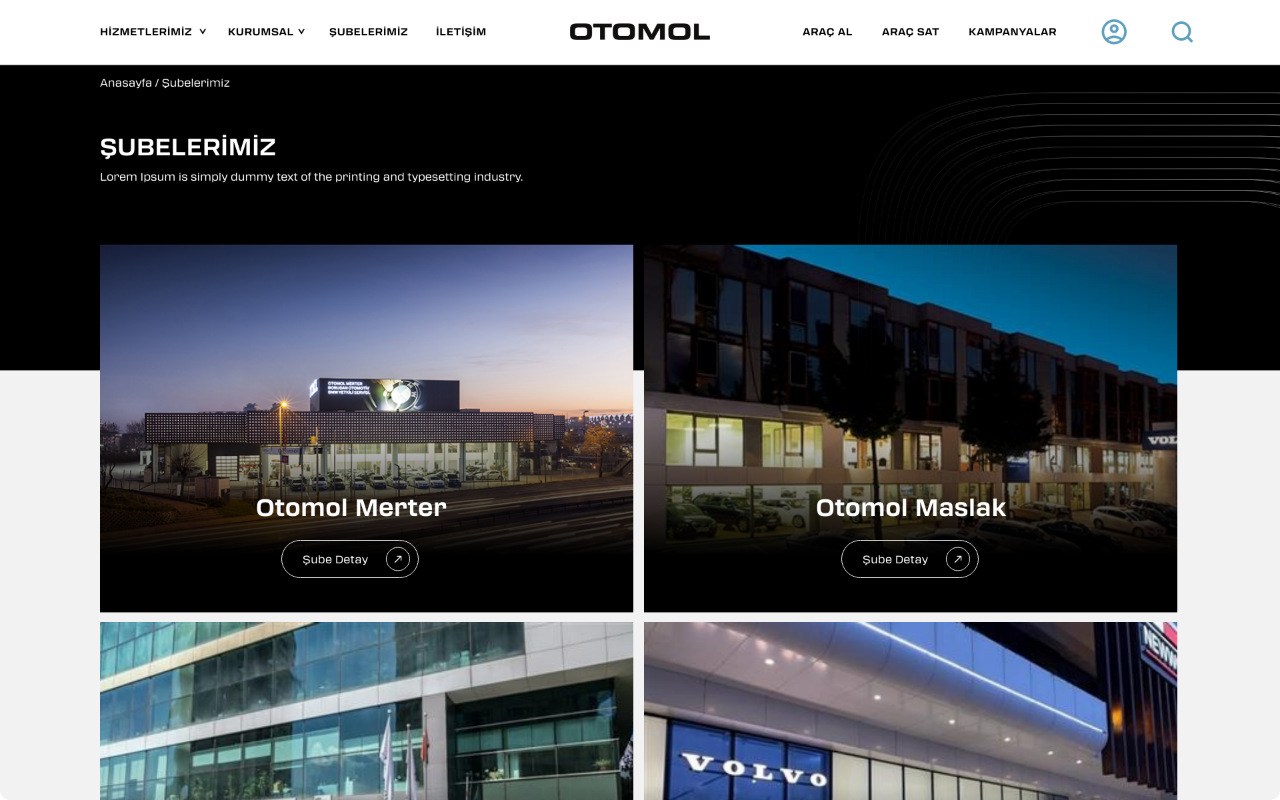
As a major multi-brand dealer managing the authorized sales and aftersales service operations for global OEMs including BMW, Volvo, Mercedes-Benz, Nissan, and Renault—alongside a high-volume independent pre-owned vehicle ecosystem—Otomol has launched a strategic experience architecture designed to consolidate its multi-layered operational strength into a unified digital platform.
By nature, Otomol’s business model carries a high degree of operational complexity. During the initial diagnostic phase of designing the digital customer experience architecture, three structural barriers impacting commercial performance were identified:
Multi-Brand Governance Balance: The mandate to integrate the rigorous corporate identity standards of distinct global luxury OEMs under Otomol’s umbrella brand equity, ensuring a frictionless, unified platform experience.
Information Asymmetry in the Pre-Owned Segment: A historical lack of digital transparency and information asymmetry in pre-owned vehicle sourcing and purchasing, which traditionally compresses digital conversion rates.
Friction from Service Diversity: The challenge of separating distinct user journeys—such as new vehicle acquisition, pre-owned inventory navigation, authorized service booking, and the loyalty ecosystem (Otomol Club)—without creating data and experience silos.
To mitigate these structural challenges and pivot the platform from a cost center into a value-generating growth engine, the new experience architecture was engineered around three strategic levers:
A. Optimizing Institutional Trust via Premium Digital Showroom Design
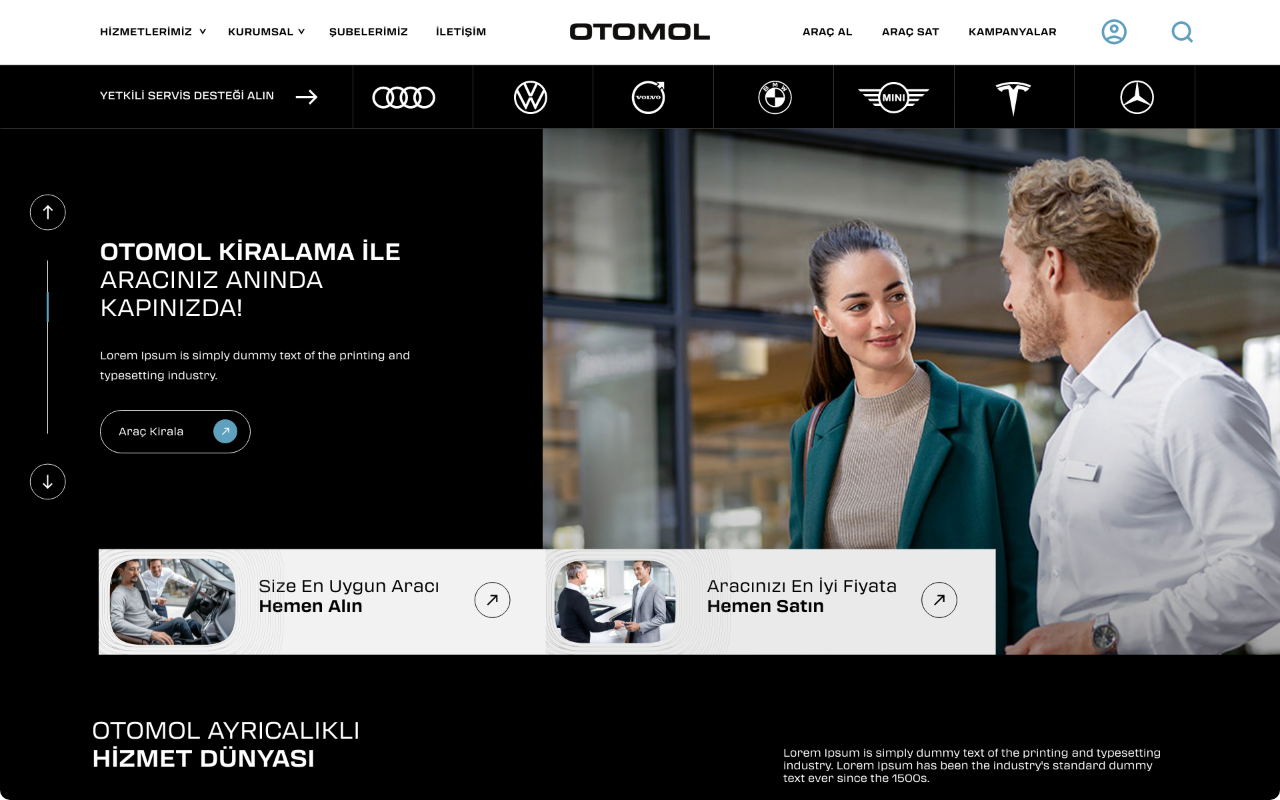
The platform's information architecture was restructured using a minimalist, high-focus visual language engineered to validate premium segment customer expectations.
Utilizing a corporate color palette anchored in deep navy and metallic tones, the design reinforces luxury segment alignment.
By reducing cognitive load and maximizing negative space, the interface transforms a dense data ecosystem into an elegant digital storefront, accelerating the user's time-to-decision.
B. Eliminating Friction via Transparency in Pre-Owned Operations
To dismantle the consumer trust barrier in the pre-owned vehicle vertical and improve high-intent lead generation, advanced data visualization techniques were deployed:
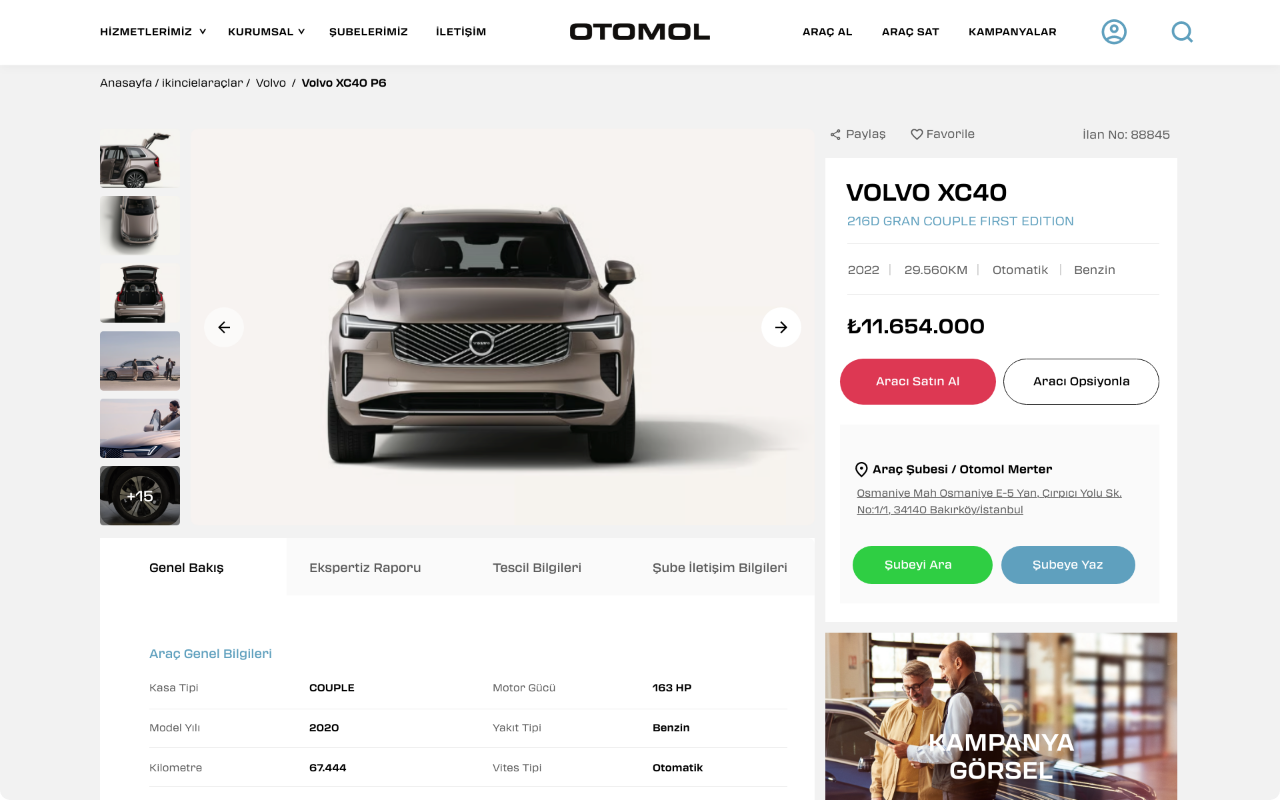
Interactive Inspection Matrix: Linear, multi-page PDF inspection reports were replaced with an interactive 2D vehicle schematic. This allows users to view reconditioned, painted, or replaced parts instantly, optimizing time-to-insight.
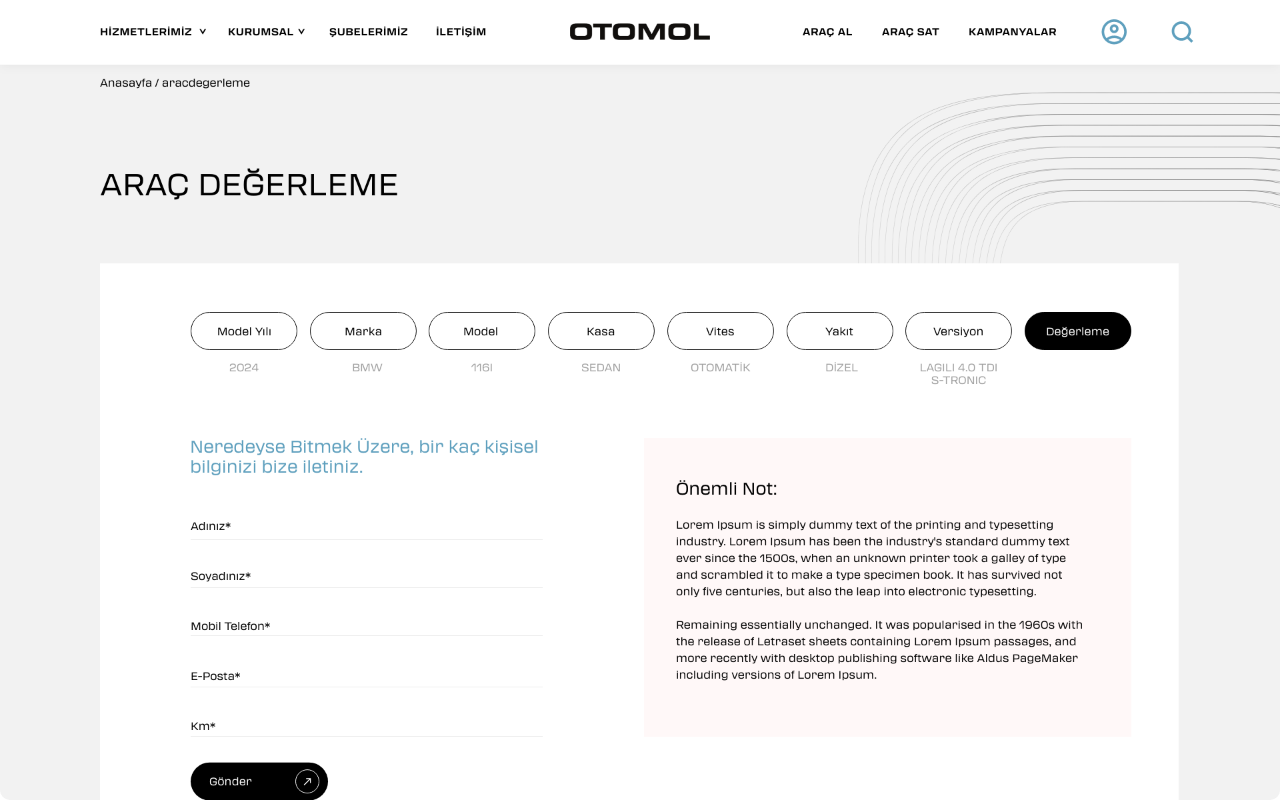
Integrated Financial Ecosystem: Trade-in valuation matrices, financing options, and cash-purchase funnels were embedded directly into the vehicle detail page as native micro-interactions, preventing third-party platform drop-offs.
C. Driving Operational Efficiency in Aftersales (3-Step Lean Service Funnel)
The inherent complexity of booking maintenance appointments was aggressively streamlined. By leveraging license plate data for automated vehicle recognition, users can now navigate a 3-step lean workflow (service selection, date/time optimization, and confirmation). This configuration minimizes turnaround time and mitigates drop-off rates during critical operational scheduling.
To transition the platform from a purely transactional touchpoint into a lifecycle vehicle asset management ecosystem that maximizes Customer Lifetime Value (LTV), the Otomol Club dashboard was positioned at the core of the architecture.
Through this personalized command center, clients can proactively manage their vehicles' service histories, projected maintenance intervals, loyalty points accrued from historical transactions, and segment-specific premium campaigns. This shift evolves the platform from a passive informational website into a pro-active digital driving assistant.
The deployment of Otomol’s Digital Customer Experience Architecture represents a structural infrastructure investment designed to optimize multi-vertical commercial operations.
By successfully migrating the institutional gravity and high-trust dynamics of physical showrooms to digital channels, the new architecture targets the following operational and financial outcomes:
A sustainable increase in high-intent lead generation metrics across the pre-owned vehicle inventory.
A quantifiable reduction in platform abandonment (bounce rates) and a parallel acceleration in digital service booking completions.
Maximization of Customer Satisfaction (CSAT) scores and brand equity by consolidating a fragmented multi-brand infrastructure into a singular, high-performance digital ecosystem.
Executive Summary: "Next-generation leadership in the automotive ecosystem is no longer dictated by horsepower under the hood, but by the speed, transparency, and premium execution of the digital interface where the customer first meets the brand. The architecture engineered for Otomol establishes a benchmark for high-performance, high-trust digital driving experiences."